
Concrete Column Reinforcement with Carbon Fiber (CFRP)
Updated: Aug 14

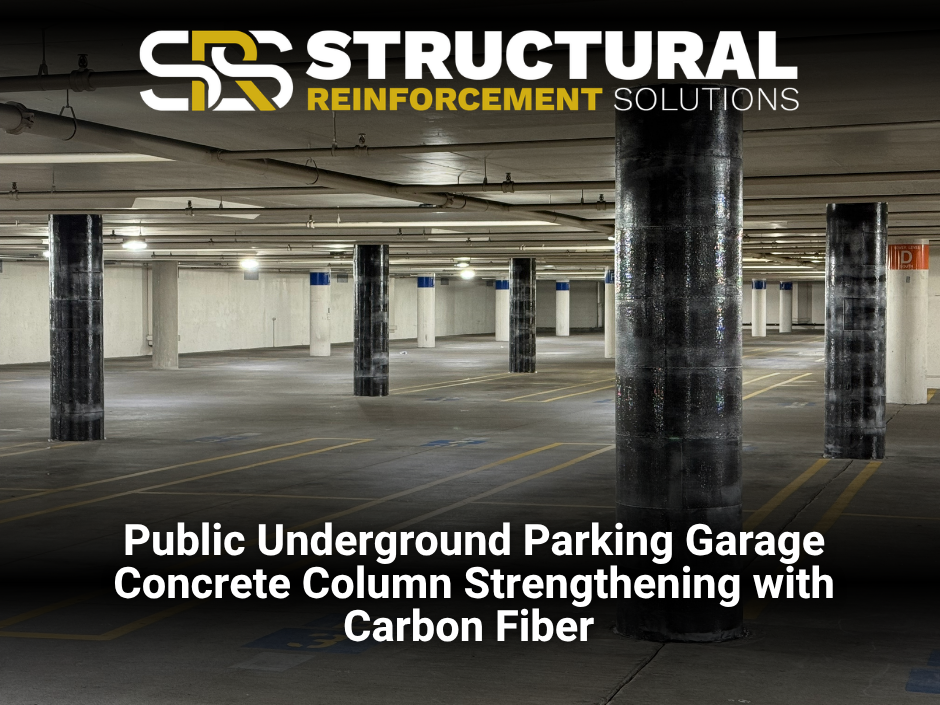
Carbon fiber reinforced polymer (CFRP) wrapping is a lightweight, corrosion-resistant method for strengthening and repairing reinforced concrete columns. An engineered CFRP system can increase confinement, shear strength, ductility, and load-carrying capacity without adding significant weight or changing the column’s dimensions.
Carbon fiber column reinforcement may be used for columns affected by corrosion, cracking, insufficient reinforcement, increased loading, seismic demands, or changes in building use. When properly designed and installed, the system transfers loads through high-strength carbon fiber bonded to the prepared concrete surface with structural epoxy.
When Should a Concrete Column Be Strengthened?
Concrete columns may require repair or reinforcement when deterioration, damage, design deficiencies, or changing structural demands reduce their ability to perform as intended. Because columns transfer loads from the structure above into the foundation, visible cracking or deterioration should be evaluated before a repair system is selected.
Common reasons for strengthening a concrete column include:
Cracking, spalling, or delaminated concrete
Corrosion of the internal reinforcing steel
Insufficient confinement or reinforcement
Increased loads or a change in building use
Seismic strengthening requirements
Vehicle impact or other physical damage
Construction or design deficiencies
Deterioration caused by moisture, chlorides, or chemicals
The need to extend the structure’s service life
Carbon fiber reinforced polymer can be designed to supplement an existing column after the underlying cause of the damage has been identified and the concrete has been properly repaired.
How Does Concrete Column Reinforcement With Carbon Fiber Work?
A CFRP strengthening system combines high-strength carbon fiber fabric with a structural epoxy that bonds the reinforcement to the prepared concrete surface. Once installed, the carbon fiber and existing column work together as a composite system.
Wrapping carbon fiber around the column provides confinement. This restrains the lateral expansion of the concrete when the column is placed under compressive load. Depending on the engineered design, CFRP reinforcement may improve the column’s confinement, ductility, shear capacity, or resistance to certain structural demands.
Carbon fiber can also be installed in different orientations. Fibers wrapped around the circumference of a column primarily provide confinement, while fibers installed vertically may contribute to strengthening in the longitudinal direction. The required fiber orientation, number of layers, overlap, and termination details must be determined for the specific column and loading conditions.
Benefits of CFRP Column Strengthening
Carbon fiber wrapping offers several advantages compared with conventional strengthening methods such as enlarging the concrete section or adding structural steel.

Lightweight Reinforcement
Carbon fiber provides high tensile strength without adding substantial dead load to the structure. The completed system also adds very little thickness to the column.
Minimal Change to Column Dimensions
Unlike a reinforced concrete jacket, a CFRP system can strengthen a column without substantially increasing its footprint. This can be especially valuable in parking garages, industrial facilities, occupied buildings, and other areas where clearance must be maintained.
Corrosion-Resistant Material
Carbon fiber reinforcement does not corrode like conventional reinforcing steel. This makes CFRP useful in structures exposed to moisture, salts, chemicals, and other aggressive conditions.
Adaptable to Different Column Shapes
CFRP systems can be installed on round, square, and rectangular columns when the concrete is properly prepared and the system is correctly detailed. Corners may need to be rounded to the radius specified in the repair design to prevent stress concentrations in the carbon fiber.
Faster, Less Invasive Installation
Carbon fiber systems can often be installed without heavy lifting equipment, extensive demolition, or large formwork systems. This may reduce disruption and downtime compared with more invasive strengthening methods.
Compatible With Protective Finishes
After installation and inspection, the CFRP system can receive a compatible protective coating or architectural finish when required. Protective coatings may be needed for ultraviolet exposure, fire requirements, environmental exposure, or appearance.
Step-by-Step Concrete Column Strengthening Process
Every structural repair is different. The following overview explains the typical stages of a CFRP column-strengthening project, but the final repair must follow the project-specific engineering documents and product installation requirements.

Step 1: Evaluate the Column and Determine the Cause of Damage
The first step is to document the cracking, spalling, corrosion, deformation, or other visible deterioration. The column’s dimensions, reinforcement, loading, exposure conditions, and surrounding structural details may also need to be evaluated.
Installing carbon fiber without addressing the underlying cause of the damage can leave important problems unresolved. Water intrusion, active corrosion, settlement, overloading, impact damage, and other contributing conditions must be considered during the repair design.
Step 2: Develop the Engineered Repair Design
The required carbon fiber system is selected based on the condition of the column and the strengthening objective. The design may specify the type of carbon fiber, fiber orientation, number of layers, overlap lengths, corner preparation, terminations, and protective finish.
CFRP strengthening should not be treated as a one-size-fits-all repair. The system must be designed to address the applicable forces and failure modes.

Step 3: Remove Unsound Concrete
Loose, delaminated, or deteriorated concrete is removed until sound material is reached. The repair area must provide a stable substrate for restoring the column profile and installing the carbon fiber system.
Any exposed reinforcing steel should be evaluated and treated as required by the repair documents. Severe section loss or ongoing corrosion may require additional corrective work before the CFRP system is installed.
Step 4: Repair Cracks and Restore the Column Profile
Structural cracks may require epoxy injection or another specified repair method. Areas of concrete loss are restored with a compatible structural repair material.
Voids, abrupt surface variations, and irregularities must be corrected because carbon fiber fabric needs continuous contact with the prepared substrate. Sharp corners are rounded when required by the engineered design.
Step 5: Prepare the Concrete Surface
Surface preparation is critical to the performance of a bonded CFRP system. Coatings, dirt, oil, dust, laitance, curing compounds, and other bond-inhibiting materials must be removed.
The completed surface must meet the repair specification and product requirements. Proper preparation helps the structural epoxy develop a reliable bond between the carbon fiber reinforcement and the existing concrete.

Step 6: Apply the Structural Epoxy
The specified structural epoxy is mixed and applied according to the manufacturer’s requirements. The epoxy bonds the carbon fiber to the prepared column and helps transfer forces between the existing structure and the new reinforcement.
Application temperatures, mixing procedures, coverage rates, working time, and substrate conditions must remain within the specified limits.

Step 7: Install the Carbon Fiber Reinforcement
The carbon fiber fabric is placed in the orientation shown in the repair design and fully saturated with the specified epoxy. The installer works the material onto the surface to achieve continuous contact and remove trapped air.
Successive layers are installed with the required orientation and overlaps. Wrinkles, folds, dry fibers, voids, and other installation defects must be avoided or corrected.
Step 8: Inspect and Protect the Completed System
The installed CFRP system is inspected for proper fiber orientation, saturation, adhesion, overlaps, terminations, and overall workmanship. Any deficiencies are addressed in accordance with the project requirements.
A compatible coating or finish may then be installed to protect the completed system from ultraviolet exposure, fire, abrasion, weather, chemicals, or other project-specific conditions.
Unidirectional vs. Bidirectional Carbon Fiber for Column Repair
Unidirectional carbon fiber contains fibers running primarily in one direction. It provides its greatest strength along that fiber direction, allowing the reinforcement to be oriented around or along the column based on the engineered design.
Bidirectional carbon fiber provides reinforcement in two directions. It may be selected for certain repair details, complex geometries, surface reinforcement requirements, or areas subject to multidirectional demands.
Neither fabric is automatically the correct choice for every column. The appropriate material depends on the repair objective, loading, column geometry, substrate condition, environmental exposure, and required system performance.
For a more detailed comparison of fiber orientation, performance, and common applications, read our guide to unidirectional vs. bidirectional carbon fiber
SRS Products for Carbon Fiber Column Reinforcement
SRS provides carbon fiber fabrics, structural epoxies, repair materials, and technical support for concrete column strengthening projects.
SRS-600 UNI Directional Carbon Fiber Fabric: A high-strength unidirectional carbon fiber fabric used for structural reinforcement applications. The fabric can be oriented according to the engineered repair design to provide confinement or reinforcement in the required direction.
SRS-660 BI Directional Carbon Fiber Fabric: A bidirectional carbon fiber fabric that provides reinforcement in two directions. It may be used for selected column-wrapping and structural repair applications when multidirectional reinforcement is required.
SRS-1000 Structural Epoxy Adhesive: A two-component structural epoxy used to saturate and bond SRS carbon fiber fabrics to properly prepared concrete and other approved structural substrates.
The complete strengthening system may also require crack-repair materials, concrete restoration products, protective coatings, and other components based on the condition and exposure of the column.
Where Is CFRP Column Strengthening Used?

Carbon fiber column reinforcement can be used in a wide range of structures, including:
Parking garages
Commercial and multi-family buildings
Industrial facilities
Warehouses
Bridges and transportation structures
Marine and waterfront structures
Water and wastewater facilities
Educational and institutional buildings
Residential structures
Columns affected by vehicle impact or localized damage
The system can be valuable where the structure must remain in service, where access is limited, or where maintaining the existing column dimensions is important.
Limitations and Engineering Considerations
Carbon fiber is a powerful strengthening material, but it is not appropriate for every damaged column. The condition of the concrete, internal reinforcing steel, foundation, connections, and surrounding structure must be considered.
CFRP should not be used to conceal an unresolved structural problem. Significant corrosion, active water intrusion, unstable concrete, continuing movement, excessive deformation, fire-performance requirements, or inadequate load paths may require additional repair measures.
The strengthening capacity of a CFRP system depends on factors including:
Existing concrete strength and condition
Column dimensions and geometry
Internal reinforcement
Applied loads
Required strengthening objective
Fiber type and orientation
Number of CFRP layers
Surface preparation and bond quality
Environmental exposure
Installation quality
Fire and building-code requirements
A qualified engineer should establish the repair requirements for the specific structure.
Frequently Asked Questions About Carbon Fiber Column Repair
Can carbon fiber repair a cracked concrete column?
Carbon fiber may be used as part of an engineered repair for a cracked concrete column. The cause and significance of the cracking must first be evaluated. Cracks may require injection or another repair method before the carbon fiber reinforcement is installed.
Can CFRP increase the load capacity of a concrete column?
An engineered CFRP system may improve confinement, shear strength, ductility, or other aspects of column performance. The achievable increase depends on the existing column, reinforcement, loading, failure mode, and CFRP design.
Does damaged concrete need to be repaired before wrapping?
Yes. Loose, unsound, or deteriorated concrete must be removed, and the column profile must be restored with suitable repair materials. Carbon fiber must be bonded to a properly prepared, structurally sound substrate.
Can square and rectangular columns be wrapped with carbon fiber?
Yes, but the corners normally require preparation and rounding in accordance with the engineered design. Sharp corners can create stress concentrations and interfere with proper installation of the fabric.
Can carbon fiber be painted after installation?
A compatible coating or finish can be applied when specified. The appropriate coating depends on ultraviolet exposure, fire requirements, environmental conditions, appearance, and compatibility with the CFRP system.
How many layers of carbon fiber are required?
There is no universal number of layers. The amount, orientation, width, overlap, and termination of the carbon fiber must be determined through the project-specific structural design.
Is carbon fiber column reinforcement permanent?
A properly designed, installed, and protected CFRP system can provide durable long-term reinforcement. Its service life depends on substrate condition, environmental exposure, installation quality, protection, and maintenance.
Get an Engineered Column Repair Plan
Every damaged or under-capacity column presents different structural and installation conditions. SRS can review your project photographs, measurements, drawings, exposure conditions, and repair objectives to help identify the appropriate strengthening system.
Submit your project for review to receive guidance on the recommended SRS materials, repair approach, and technical support needed for your concrete column reinforcement project.

Watch how carbon fiber can repair cracked or damaged concrete columns in this short informational video.

To learn more about reinforced concrete column strengthening at


Comments