
Wastewater Concrete Repair with Carbon Fiber in Murrysville PA
Updated: Oct 2
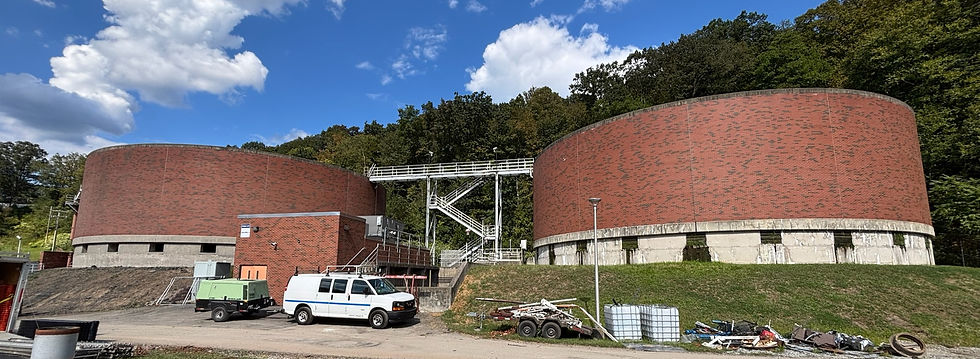
At the Meadowbrook Road Sewage Treatment Plant in Murrysville, Pennsylvania, United Structural Systems (USS) advanced surface applied products to address cracking and spalling along in the concrete bands at the top of the foundation around the nitrification towers.
The work combined SRS-4000 Concrete Guard and SRS-4100 Steel Guard, concrete and rebar repairs, and carbon fiber reinforcement. For owners of aging treatment facilities and concrete holding tanks, this project illustrates a coordinated approach to concrete restoration and structural strengthening aimed at extending service life with minimal disruption to operations.
Deterioration of concrete causing structural cracks Wastewater holding Tanks with Visible Signs of Concrete Damage Large nitrification tanks at a wastewater facility Structural Inspection of waste water nitrification tanks Loose Concrete Removal around concentrated damaged areas over reinforcing steel Structural cracks running through the concrete band
Cracking and localized spalling in the concrete band at the Murrysville wastewater facility. Photo courtesy of USS.
Concrete deterioration around the nitrification towers
Planning called for sounding the concrete with the engineer of record to establish which areas needed repair. USS began by removing loose concrete, then treated and repaired the rebar and concrete using SRS products. This preparation provided the foundation for the carbon fiber work that followed.

Wastewater Concrete Repair with Concrete Guard and Steel Guard
SRS-4100 Steel Guard was used as part of the steel treatment. This corrosion inhibitor is designed for exposed and embedded reinforcement, helping reduce corrosion activity and protect the steel within the repair. The concrete was also treated with SRS-4000 Concrete Guard. Its penetrating chemistry is designed to improve surface strength and reduce porosity and permeability, helping create a more durable substrate for repairs and bonded reinforcement.
These treatments serve different purposes within the same repair. Steel Guard addresses corrosion activity, while Concrete Guard improves the concrete substrate. Both depend on proper preparation and an assessment of any damage that needs structural repair.
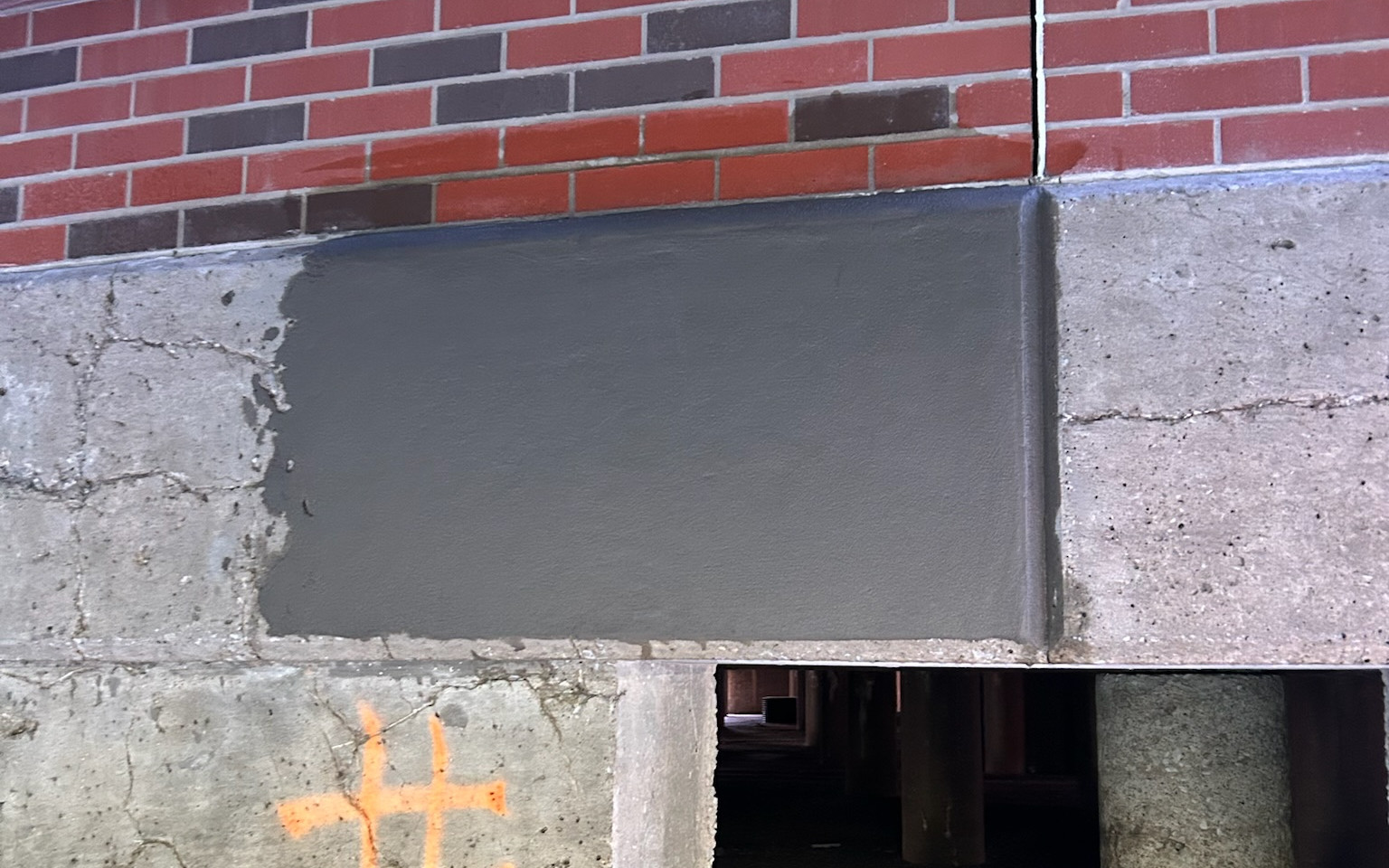
The damaged concrete was then repaired in preparation for carbon fiber reinforcement. The approved repair system included SRS-2000 Structural Epoxy Paste for filling voids before carbon fiber installation, with surface preparation between each stage to suit the materials being applied.
Reinforcing the concrete band with carbon fiber
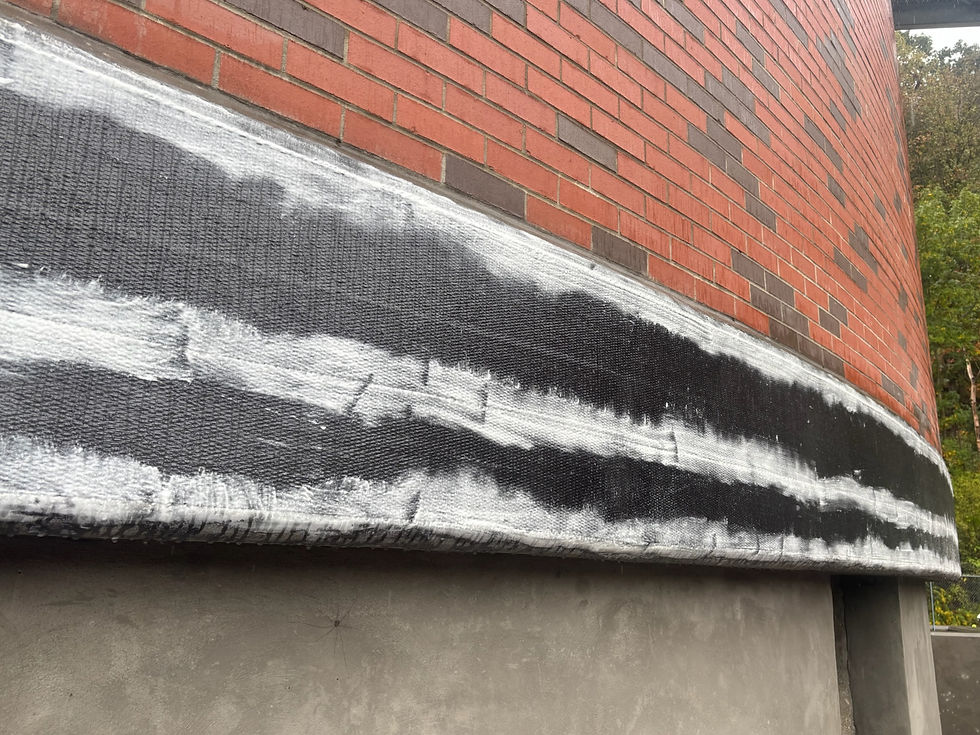
With the concrete repaired, USS then applied carbon fiber reinforcement to the concrete bands. The approved system specified SRS-600UNI carbon fiber fabric bonded with SRS-1000 Structural Epoxy Adhesive.
Carbon fiber reinforced polymer, or CFRP, combines fabric and resin to form a thin layer of reinforcement bonded to the existing structure. Its layout is tailored to the component being strengthened, including the direction of the fibers and the required coverage. The reinforcement relies on its bond to the concrete, making the quality of the underlying repair especially important. Sound surfaces and careful fabric placement help the concrete and carbon fiber work together. The project specification also called for direct pull-off bond testing.
What this means for aging wastewater facilities and holding tanks
Repairing selected components can help preserve more of an existing structure. At Murrysville, the work focused on damaged concrete and the bands designated for reinforcement, bringing treatment and strengthening into a coordinated repair.
Similar questions arise at concrete holding tanks, treatment basins, clarifiers, and other process structures. Cracked lids, deteriorated perimeter bands, damaged openings, and exposed reinforcement can all warrant a closer look before deciding on repair or replacement.
SRS-600UNI Carbon Fiber Confinement for Global Strengthening of the Holding Tanks Global Strengthening and confinement of the concrete structure utilizing composite strengthening Concealment of carbon fiber edges using minifibers to feather the edges of the FRP for concealment
Each structure needs a repair suited to its loads and exposure. Where a tank also has leakage, moving joints, or aggressive chemical contact, the plan may need a compatible lining, waterproofing, or joint repairs alongside structural strengthening.
A useful review also considers access, shutdown requirements, and future maintenance. These factors help establish whether rehabilitation is practical and what is needed to support a longer service life.
Paint and Concrete coating over finished repairs UV protective coating applied over completed FRP and concrete repairs Completed Concrete Repair installation on Wastewater treatment tank
Final protective coating applied over finished structural repairs on the wastewater tanks
A related concrete holding tank repair in Coachella Valley, CA
At a Southern California chemical processing facility, SRS and Dalinghaus Construction evaluated cracking around concrete industrial holding tank lids, perimeter edges, and openings. The repair combined concrete preparation and restoration with SRS-600UNI and SRS-660BI carbon fiber reinforcement.
That project provides another example of adapting the reinforcement to the damaged component. Explore the holding tank crack reinforcement case study for condition photos and views of the installation.

Comments